

Living in Bend, Oregon: A Community Guide for Newcomers
Everything you need to know about living in Central Oregon's high-desert hub
— neighborhoods, cost of living, jobs, schools, recreation, and how to make Bend home.
Welcome to Bend
Ask ten people why they moved to Bend and you'll get ten versions of the same answer: they came for a long weekend, stood on the banks of the Deschutes River with a mountain view at their back, and started quietly rearranging their lives to stay. Bend has a way of doing that. Tucked against the eastern slope of the Cascade Range at roughly 3,600 feet, it is the rare town where you can ski volcanic powder in the morning, paddle a river through the middle of downtown in the afternoon, and end the day on a brewery patio watching alpenglow settle over the Three Sisters.
What was once a sleepy mill town is now one of the fastest-growing communities in the Pacific Northwest, home to roughly 105,000 people and the unofficial capital of Central Oregon. Yet Bend still feels like a place where the barista knows your order and the trailhead is ten minutes from your front door. This guide is written for newcomers — whether you're relocating for a job, chasing the outdoor lifestyle, planning a retirement, or simply curious about what daily life here is really like. We'll walk through the geography and climate, the neighborhoods, the true cost of living, the job market, schools, recreation, food and culture, and the practical business of getting settled.
A note on honesty: Bend is genuinely wonderful, but it isn't a postcard. Housing is expensive, summers bring wildfire smoke some years, and "300 days of sunshine" is more slogan than statistic. You'll find the real numbers in here alongside the scenery, because making a good decision about where to live means seeing the whole picture.
- Population: ~105,000 (city); Deschutes County ~215,000
- Elevation: ~3,600 ft · high desert, east of the Cascades
- Region: Central Oregon (with Redmond, Sisters, Sunriver, La Pine, Prineville)
- Known for: Mt. Bachelor, the Deschutes River, the Bend Ale Trail, and go-play-all-day energy
The Lay of the Land: Geography & Climate
Bend sits on a high-desert plateau where ponderosa pine forest meets open sagebrush country. Drive fifteen minutes west and you're climbing into alpine lakes and old-growth timber; drive east and the landscape opens into juniper, rimrock, and big sky. This transition zone is the secret behind Bend's outsized recreation menu — the mountains and the desert are both in your backyard.
A high-desert climate
Because Bend lies in the rain shadow of the Cascades, it stays far drier than the famously soggy western side of Oregon. The town averages only about 12 inches of precipitation a year — compare that to roughly 36 inches in Portland. Summers are warm, dry, and gloriously low-humidity, with July highs around 84°F and cool evenings thanks to the elevation. Winters are cold and snowy in town, with January highs near 42°F and roughly 33 inches of snowfall in an average year. Spring and fall are short but spectacular.
The truth about “300 days of sunshine”
You'll see this claim on brochures everywhere, and it deserves a clear-eyed answer. When The Bulletin actually counted, Bend recorded about 239 sunny or mostly sunny days in 2025 — 159 fully sunny plus 80 mostly sunny. That's not 300, but it is still the sunniest corner of Oregon by a wide margin, and it's a night-and-day difference from the gray Willamette Valley winters many newcomers are leaving behind. The high desert delivers real sunshine; just calibrate your expectations to “abundant,” not “relentless.”
Worth knowing: wildfire smoke has become part of late summer in Central Oregon. Most years bring a stretch of hazy days in August or September when smoke drifts in from regional fires. It is manageable and highly variable year to year, but it is an honest part of the picture newcomers should plan for.
Bend's Neighborhoods: Finding Your Corner of Town
Bend is a small city with a big-city range of neighborhoods, each with its own personality and price point. Here is a quick orientation to the areas newcomers ask about most.
Old Bend & the Downtown Core
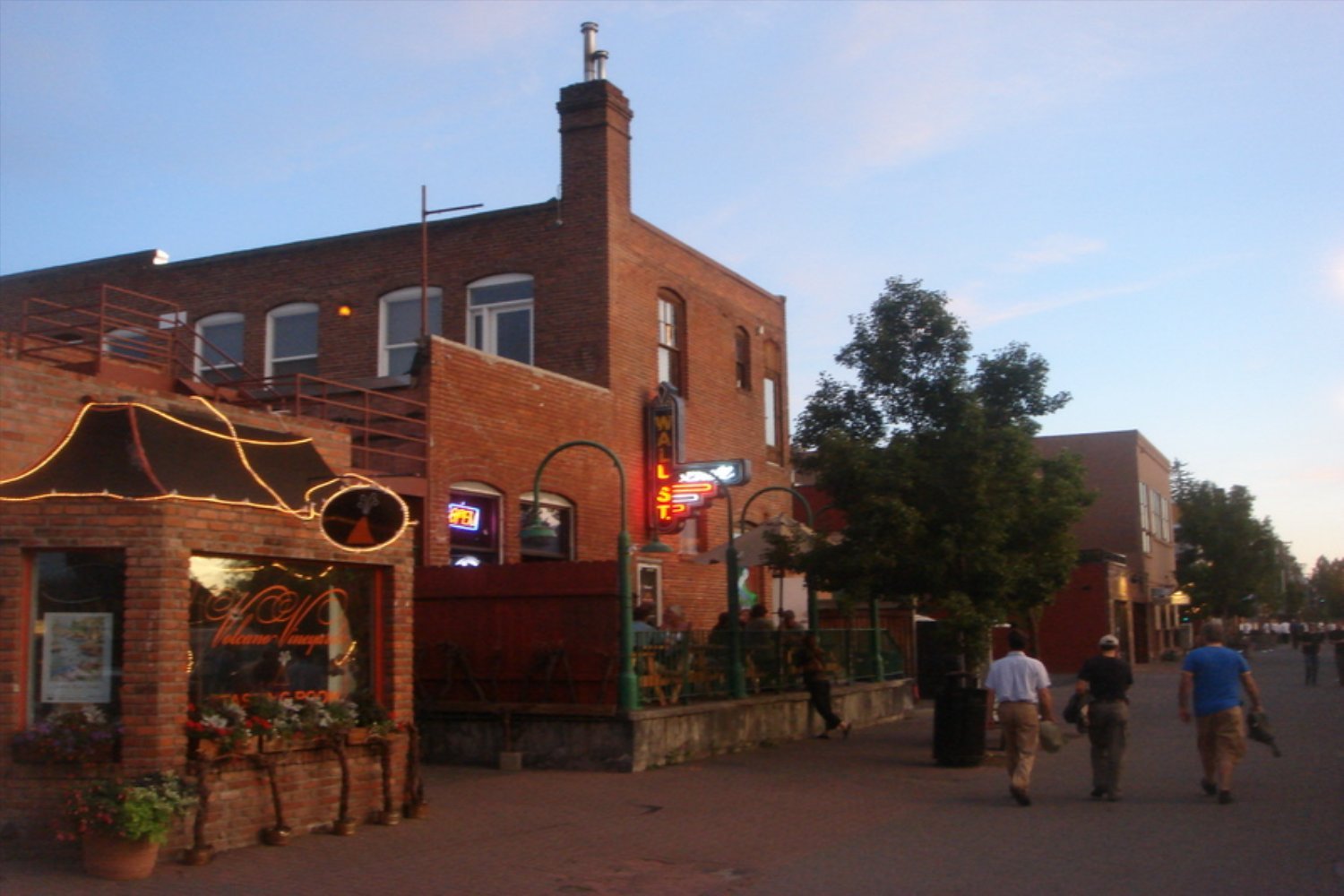
The heart of the city, with tree-lined streets, historic bungalows, and walkable access to shops, restaurants, and the river. Charming and central, but among the most expensive and competitive areas to buy.
The Westside & NorthWest Crossing
Bend's beloved westside blends old-growth charm with newer, master-planned living. NorthWest Crossing is a walkable, design-forward neighborhood with parks, a farmers market, and easy trail access. Popular with families and outdoor enthusiasts; prices reflect the demand.
The Old Mill District
Once the site of the region's lumber mills, now a riverside hub for shopping, dining, and events, with an amphitheater that draws big-name concerts. Nearby housing offers newer construction and river-trail access, often at a slightly gentler price than the westside.
The East Side
Bend's more affordable frontier, with newer subdivisions, larger lots, and quicker access to Highway 20 and the airport in Redmond. A practical choice for buyers who want more house for the money and don't mind being a few minutes farther from the downtown scene.
Newcomer tip: rent before you buy.
Bend's neighborhoods each feel very different across the seasons. Renting for a few months lets you learn the traffic patterns, commute times, sun exposure, and vibe of an area before you commit. Many of my happiest clients rented first, then bought with confidence.
Cost of Living & Taxes
Let's talk numbers. Bend is not a cheap place to live, and it's important to go in with clear expectations. The good news: Oregon's tax structure offsets some of the cost, and many newcomers find the quality of life worth the premium.
Housing: the main event
Housing is the single biggest driver of Bend's cost of living. Home prices have climbed well above the national average, and inventory can be tight, especially in the most desirable neighborhoods. Rents are elevated too. Get current, block-by-block figures from a local broker before you set your budget.
Oregon's tax picture
Oregon's tax mix is unusual, and it can work in your favor depending on how you spend and earn:
• No sales tax. Oregon has no statewide sales tax, so everyday purchases cost less at the register.
• State income tax of roughly 4.75%–9.9%. Oregon relies on income tax instead, with top brackets among the higher ones nationally.
• Property taxes around 0.82% effective. Rates are moderate versus the national average, though your bill depends on assessed value.
What to expect at a glance
| Cost factor | What to expect |
|---|---|
| Housing | Well above the national average; the biggest budget line. |
| Sales tax | None — genuine savings on everyday spending. |
| Income tax | Higher than average; plan for it if you're a high earner. |
| Utilities & groceries | Near or slightly above national norms. |
Figures are general guidance and change over time—ask for current local numbers.
The Bend Economy & Jobs
For a city its size, Bend has a surprisingly diverse and resilient economy. It was once driven almost entirely by timber; today it runs on tourism, healthcare, a growing tech and manufacturing base, and an ever-larger population of remote workers who brought their jobs with them.
The major employers
Healthcare anchors the local economy, with the regional hospital system among the largest employers in the area. Tourism and hospitality are close behind, supported by Mt. Bachelor, the river, the breweries, and a steady flow of visitors year-round. Local government, schools, and a cluster of outdoor-industry and beverage companies round out the base.
Universities and the innovation economy
Bend punches above its weight in education and innovation. A branch campus of Oregon State University—OSU-Cascades—continues to expand, feeding local talent into healthcare, science, and business. Alongside it, a small but energetic startup and outdoor-tech scene has taken root, giving the city an entrepreneurial edge unusual for a town this size.
A remote-work magnet
Perhaps the biggest economic story of the last several years is remote work. Bend has become a magnet for professionals who can work from anywhere and want to trade a big-city commute for trailheads and river access. If you're bringing your own job, you'll be in very good company—just budget for reliable internet and a home office that keeps you productive.
Schools & Education
Families relocating to Bend usually have schools near the top of their list, and the area delivers a solid range of options. The public school district serves the city and surrounding communities with a mix of neighborhood elementary schools, middle schools, and high schools, and it has grown quickly alongside the population.
Beyond the traditional public schools, Bend offers charter and magnet programs, well-regarded private and parochial options, and a strong homeschooling community supported by co-ops and the region's abundant outdoor classrooms. Specific school boundaries, ratings, and program availability change over time and vary by neighborhood, so it's worth mapping schools against the areas you're considering before you choose where to buy.
For higher education and workforce training, OSU-Cascades provides four-year and graduate programs, while Central Oregon Community College offers two-year degrees, certificates, and continuing education. Together they give students and career-changers real options without leaving Central Oregon.
The Great Outdoors: Recreation
This is why most people come. Bend is a genuine outdoor playground, and the recreation isn't a weekend novelty—it's woven into daily life. On a single long summer day you can paddle the river before work and hit a mountain-bike trail after. Here's what's in your backyard.
Winter: Mt. Bachelor
Just up the Cascade Lakes Highway, Mt. Bachelor is one of the largest ski resorts in the Pacific Northwest, with a long season, dry powder, and terrain for every level. Beyond downhill skiing and snowboarding, the area is a hub for Nordic skiing, snowshoeing, and sledding, so winter here is something to look forward to rather than endure.
The Deschutes River
The Deschutes runs right through town and is the summer heartbeat of Bend. Float it on a tube through the Old Mill, paddleboard the calmer stretches, fly-fish for trout, or just walk the miles of riverside trail. The river is where the whole city seems to gather when the weather turns warm.
Trails, peaks, and volcanic country
Hundreds of miles of hiking and mountain-biking trails start minutes from downtown, from the buttes inside city limits to alpine lakes and old-growth forest to the west. The region is volcanic country, too—lava tubes, cinder cones, and the Newberry caldera make for unforgettable day trips, and Smith Rock to the north is world-famous for rock climbing.
The Bend Ale Trail.
Bend has one of the highest concentrations of craft breweries per capita in the country, and the self-guided Bend Ale Trail strings them together into a delicious tour. Grab a passport, sample your way around town, and earn a little swag for your trouble—it's a fun, tasty way to get to know the city (with a designated driver, of course).
Food, Drink & Culture
For a mid-sized mountain town, Bend eats and drinks remarkably well. The food scene punches far above its weight, with farm-to-table restaurants, food-cart lots, coffee roasters, and a nationally recognized craft-beer culture that put the city on the map. Cider, spirits, and kombucha makers have joined the party, so there's something for every palate.
Culture in Bend leans casual and outdoorsy, but it's far from sleepy. Summer brings a packed calendar of concerts at the Old Mill amphitheater, street fairs, farmers markets, and festivals celebrating everything from film to beer to bikes. Downtown galleries, a lively music scene, and a genuine community spirit round out a lifestyle that manages to feel both laid-back and full.
Maybe the best part is how easy it is to plug in. Whether your thing is trail running clubs, ski groups, volunteer trail crews, or simply a favorite brewery patio, newcomers tend to find their people quickly. Bend is welcoming by nature—most residents were transplants themselves not long ago.
Getting Around & Getting Here
One of Bend's quirks is that it feels remote and connected at the same time. It's a few hours from the nearest big city, yet it has its own airport, easy highways, and a walkable, bike-friendly core.
Flying in and out
Redmond Municipal Airport (RDM), about a 20-minute drive north of Bend, offers direct flights to a growing list of Western hubs, making trips home or out of town easier than you'd expect for a town this size. For more routes and lower fares, some residents also drive to Portland.
Driving distances
Bend makes a great home base for road trips. Here's roughly how far you are from the places you'll want to visit:
| Destination | Approx. drive time |
|---|---|
| Portland, OR | About 3 to 3.5 hours |
| Mt. Bachelor | About 25 to 30 minutes |
| Smith Rock State Park | About 40 minutes |
| Oregon Coast | About 3.5 to 4 hours |
| Crater Lake National Park | About 2 hours |
Around town
Day to day, Bend is easy to navigate. Most errands are a short drive, the downtown and Old Mill areas are very walkable, and the city keeps expanding its network of bike paths and trails. Many residents commute by bike in the warmer months, and a car is still the practical choice for reaching trailheads and the mountain.
A Newcomer's First-Year Checklist
Moving to a new place is a lot. Here's a short, sanity-saving checklist for your first year in Bend:
1. Get your bearings by season. Bend feels different in July than in January. Try to experience at least a couple of seasons before making big decisions about where to settle.
2. Rent before you buy. Test-drive a neighborhood or two so you can buy with confidence when the right home comes along.
3. Gear up for the outdoors. Even casual residents end up with skis, a bike, or a paddleboard. Buy used at local gear swaps to save money while you figure out what you love.
4. Prepare for winter driving. Snow tires and a little practice go a long way. Keep an emergency kit in the car for mountain trips.
5. Find your community. Join a club, a class, or a volunteer trail crew. It's the fastest way to turn a new town into home.
6. Lean on local expertise. From schools to neighborhoods to timing the market, a good local broker can save you time, money, and stress—don't hesitate to ask.
Thinking About Making Bend Home?
If you've read this far, Bend has probably gotten under your skin a little—and honestly, that's how most of us ended up here. Moving to a new place is exciting and a little daunting, and having someone local in your corner makes all the difference. That's where I come in.
I'm Jordan Marx, a licensed broker who lives, works, and plays in Central Oregon. I help newcomers navigate neighborhoods, cost of living, timing, and everything in between—so you can make a confident, well-informed move. Whether you're ready to tour homes or just have questions about life in Bend, I'd love to hear from you.
Let's talk about your move to Bend
Jordan Marx · Licensed Broker, eXp Realty
Oregon Realty Pro · Central Oregon
Call or text: 541-841-9727
Email: jordanmarx@gmail.com
Web: OregonRealtyPro.com
This guide is for general informational purposes only and does not constitute financial, legal, tax, or investment advice. Figures, statistics, and local details are approximate and change over time; please verify current information independently. Jordan Marx is a licensed real estate broker with eXp Realty.
 The content relating to real estate for sale on this website comes in part from the MLS of Central Oregon. Real estate listings held by Brokerages other than eXp Realty in Oregon are marked with the Reciprocity/IDX logo, and detailed information about these properties includes the name of the listing Brokerage. © MLS of Central Oregon (MLSCO).
This content last updated on September 23, 2026 7:20 AM UTC Some properties which appear for sale on this website may subsequently have sold or may
The content relating to real estate for sale on this website comes in part from the MLS of Central Oregon. Real estate listings held by Brokerages other than eXp Realty in Oregon are marked with the Reciprocity/IDX logo, and detailed information about these properties includes the name of the listing Brokerage. © MLS of Central Oregon (MLSCO).
This content last updated on September 23, 2026 7:20 AM UTC Some properties which appear for sale on this website may subsequently have sold or may
 All information provided is deemed reliable but is not guaranteed and should be independently verified. IDX information is provided exclusively for consumers' personal, non-commercial use, that it may not be used for any purpose other than to identify prospective properties consumers may be interested in purchasing, and that the data is deemed reliable but is not guaranteed accurate by RMLSTM.
The content relating to real estate for sale on this web site comes in part from the IDX program of the RMLSTM of Portland, Oregon. Real estate listings held by brokerage firms other than eXp Realty in Oregon are marked with the RMLSTM logo, and detailed information about these properties includes the names of the listing brokers. Listing content is copyright © 2026 RMLSTM, Portland, Oregon.
This content last updated on September 23, 2026 7:09 AM UTC at 4 AM. Some properties which appear for sale on this web site may subsequently have sold or may no longer be available.
All information provided is deemed reliable but is not guaranteed and should be independently verified. IDX information is provided exclusively for consumers' personal, non-commercial use, that it may not be used for any purpose other than to identify prospective properties consumers may be interested in purchasing, and that the data is deemed reliable but is not guaranteed accurate by RMLSTM.
The content relating to real estate for sale on this web site comes in part from the IDX program of the RMLSTM of Portland, Oregon. Real estate listings held by brokerage firms other than eXp Realty in Oregon are marked with the RMLSTM logo, and detailed information about these properties includes the names of the listing brokers. Listing content is copyright © 2026 RMLSTM, Portland, Oregon.
This content last updated on September 23, 2026 7:09 AM UTC at 4 AM. Some properties which appear for sale on this web site may subsequently have sold or may no longer be available.
